Real Estate Tips, Tricks & Market Trends


  • Welcome to our comprehensive real estate blog, your go-to resource for all things related to buying and selling property. Whether you're a seasoned investor or a first-time buyer, our blog is designed to provide you with valuable insights, market trends, and expert advice to help you navigate the ever-changing real estate landscape.
  • Stay up to date with the latest market trends and current data analysis. Our team of experienced real estate professionals keeps a close eye on the market, providing you with timely and accurate information on pricing, inventory, and market conditions. Whether you're interested in residential, commercial, or investment properties, we've got you covered with data-driven articles that will empower you to make informed decisions.
  • Understanding real estate terminology is essential for success in any transaction. Our blog features a dedicated section where we explain key real estate terms, ensuring that you have a solid foundation of knowledge. Whether it's understanding mortgage options, legal documents, or industry jargon, we break down complex concepts into digestible explanations that empower you to engage in conversations and negotiations effectively.
  • Whether you're looking to buy your dream home, sell a property for maximum profit, or expand your knowledge of the real estate market, our blog is your ultimate resource. Join us on this journey as we equip you with the tools, information, and guidance you need to succeed in your real estate endeavors.
Jan. 29, 2024

3 Must-Do’s When Selling Your House in 2024

selling your home in 2024


If one of the goals on your list is selling your house and making a move this year, you’re likely juggling a mix of excitement about what’s ahead and feeling a little sentimental about your current home.


A great way to balance those emotions and make sure you’re confident in your decision is to keep these three best practices in mind when you’re ready to sell.


Price Your Home Right

The housing market shifted in 2023 as mortgage rates rose and home price appreciation started to normalize once again. As a seller, you still need to recognize how important it is to price your house appropriately based on where the market is today. Hannah Jones, Economic Research Analyst for Realtor.com, explains:

“Sellers need to become familiar with their local market and work closely with a local agent to make sure their listing is attractive to buyers. Buyers feeling the pressure of affordability are likely to be pickier, so a well-priced, well-maintained home is the ticket to drumming up big demand.”

If you price your house too high, you run the risk of deterring buyers. And if you go too low, you’re leaving money on the table. An experienced real estate agent can help determine what your ideal asking price should be, so your house moves quickly and for top dollar.


Keep Your Emotions in Check

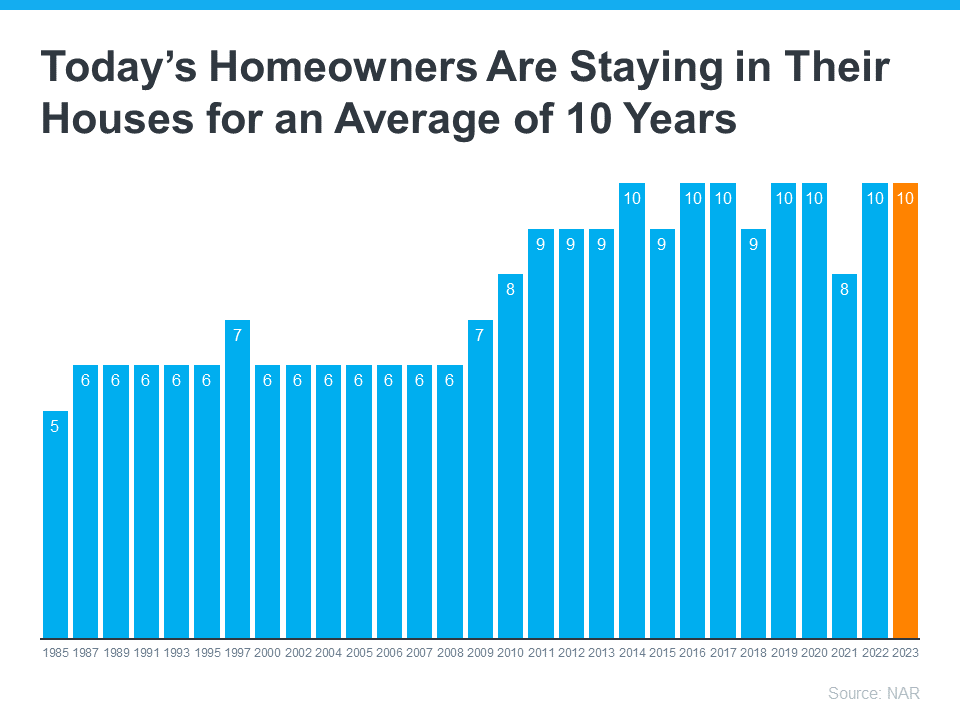
Today, homeowners are staying in their houses longer than they used to. According to the National Association of Realtors (NAR), since 1985, the average time a homeowner has owned their home has increased from 6 to 10 years (see graph below):

homeowners staying in homes 10 years

This is much more than what used to be the norm. The side effect, however, is when you stay in one place for so long, you may get even more emotionally attached to your space. If it’s the first home you bought or the house where your loved ones grew up, it very likely means something extra special to you. Every room has memories, and it’s hard to detach from the sentimental value.


For some homeowners, that makes it even tougher to separate the emotional value of the house from fair market price. That’s why you need a real estate professional to help you with the negotiations and the best pricing strategy along the way. Trust the professionals who have your best interests in mind.


3. Stage Your Home Properly

While you may love your decor and how you’ve customized your house over the years, not all buyers will feel the same way about your vibe. That’s why it’s so important to make sure you focus on your home’s first impression, so it appeals to as many buyers as possible.


Buyers want to be able to picture themselves in the home. They need to see themselves inside with their furniture and keepsakes – not your pictures and decorations. As Jessica Lautz, Deputy Chief Economist and Vice President of Research at NAR, says:


“Buyers want to easily envision themselves within a new home and home staging is a way to showcase the property in its best light.”

A real estate professional can help you with expertise on getting your house ready to sell.


Bottom Line

If you’re considering selling your house, let’s connect so you have help navigating the process while prioritizing these must-do’s.


If you have any questions about this article or other real estate challenges, please contact me directly!


Until next time, stay real informed!


Richard Allen

REALTOR®, Media Realty Group Inc.

Licensed in MA, CT, RI and NH

President, the realinsyghts group LLC™

Zillow Premier Agent

508-686-0940

rich@realinsyghts.com


The information contained and the opinions expressed in this article are not intended to be construed as investment advice. the realinsyghts group™ LLC and Media Realty Group, Inc. do not guarantee or warrant the accuracy or completeness of the information or opinions contained herein. Nothing herein should be construed as investment advice. You should always conduct your own research and due diligence and obtain professional advice before making any investment decision. the realinsyghts group™ LLC and Media Realty Group, Inc. will not be liable for any loss or damage caused by your reliance on the information or opinions contained herein.
Posted in Sellers
Jan. 29, 2024

Tips for Selling your Home during the Winter Months

Although conventional wisdom is that selling your home in colder months is not a good idea, it’s simply not true. There are several advantages to selling during winter—and many effective strategies for doing so successfully.


Benefits of winter selling

With its shorter days and holiday seasons, winter makes us want to push off our big projects until spring. However, it is an ideal time to list your home for many reasons. And with help from your real estate agent, you can improve your chances of selling quickly and for a fair market price.


Less competition

Spring and summer are the most popular times to sell; therefore, there’s often a lack of competition from other sellers during winter, so putting your home on the market in winter can put you in the driver’s seat.


Motivated buyers

Generally, winter buyers are motivated buyers. They’re likely moving for reasons that do not allow them to wait until the busy spring and summer markets, which are typically laden with listings. For instance, January is one of the most significant months for corporate job relocations. Those buyers often have to move as quickly as possible, especially if they have children in school.


Limited inventory

During winter, the principle of supply and demand kicks in—buyers are less likely to haggle on the price due to lower inventory levels, increasing your chances of selling your home at full price.


Nice curb appeal

Some homes show better in the winter, especially in areas with frequent snowfalls. You can’t beat the beauty of a snow-capped roof or the delicious smell of tree pine. Depending on your location, this could be your home’s best-selling curb appeal feature!


Considerations for selling

Listing your home in the winter can have disadvantages, so depending on your circumstances, you’ll want to weigh the pros and cons and the various options available for you.


Inclement Weather

Since the weather can be unpredictable, scheduled showings may be interrupted, or your moving day may need to be postponed. Try to manage your expectations by being flexible and having a backup plan in case of delay.


Winter upkeep

Maintaining your home’s curb appeal can be difficult due to fallen branches, wayward leaves, and a browned lawn. If you tend to have snow and ice on your property, take the time to shovel and sand the steps and driveway to give buyers easy access to your home.


Daylight savings

Because the days are shorter at this time of year, it may be difficult for buyers to take in all your home has to offer if they’re touring your home later in the day. Proper staging and lighting can help position your home in a better light.


Stage to sell

Other than pricing your home correctly, staging is one of the most important things you can do to sell your home in the least amount of time for the most money. Although maintaining great curb appeal during winter has its challenges, taking the extra time and effort to stage your home can positively impact a buyer’s first impression.


Welcoming decor

If you typically add lights and simple holiday decor to your home, consider leaving them up past the new year and blending them with your typical design style to keep that warm, cozy feeling alive. However, be sure to discard your Christmas tree and any other holiday-specific memorabilia.


Comfortable atmosphere

On a chill day, turn your heat up, and if you have an easy-to-operate fireplace, flip on the switch to add warmth and ambiance. For daytime showings, draw the shades and blinds and turn on any overhead lights to make the room as bright as possible. Conversely, turn on all table and floor lamps for warm lighting for evening showings, and ensure your home’s exterior is well-lit. It’s also not passé to bake some cookies, brew a fresh pot of coffee, or offer up a cup of hot cider to buyers and agents—it sets a comforting tone and a friendly atmosphere.


Marketing collateral

No matter what time of year you sell, creating eye-catching, storytelling marketing materials is essential for any listing. And because sales are slower in the winter, your real estate agent will have even more time to dedicate to making your listing stand out. Also, emphasize local attractions, events, and available activities with chamber of commerce brochures to give the buyer a sense of what to expect in your community.


If you have any questions about this article or other real estate challenges, please contact me directly!


Until next time, stay real informed!


Richard Allen

REALTOR®, Media Realty Group Inc.

Licensed in MA, CT, RI and NH

President, the realinsyghts group LLC™

Zillow Premier Agent

508-686-0940

rich@realinsyghts.com


The information contained and the opinions expressed in this article are not intended to be construed as investment advice. the realinsyghts group™ LLC and Media Realty Group, Inc. do not guarantee or warrant the accuracy or completeness of the information or opinions contained herein. Nothing herein should be construed as investment advice. You should always conduct your own research and due diligence and obtain professional advice before making any investment decision. the realinsyghts group™ LLC and Media Realty Group, Inc. will not be liable for any loss or damage caused by your reliance on the information or opinions contained herein.



Posted in Sellers
Jan. 26, 2024

3 Keys To Hitting Your Homeownership Goals in 2024

If buying or selling a home is your goal for 2024, it’s important to understand today’s housing market, know your why, and work with industry experts to bring your homeownership vision for the new year into focus.

Over the last year, the economy had a big impact on the housing market and likely on your wallet, too. That’s why it’s critical to have a clear picture of not just the market today but also of what you want out of it when you buy or sell a home. Danielle Hale, Chief Economist at Realtor.comexplains:

The key to making a good decision in this challenging housing market is to be laser focused on what you need now and in the years ahead, so that you can stay in your home long enough that buying is a sound financial decision.

Here are a few things to think through as you define your goals for 2024.

1. Know Your Why

You’re dreaming about making a move for a reason – what is it? No matter what’s happening in the market, there are still many compelling reasons to buy a home today. Your needs may have changed in a way your current house can’t address, or you could be ready to step into homeownership for the first time. Use your why and your motivation as a guidepost in partnership with an expert advisor to make sure your move gives you a lasting sense of accomplishment.

2. Figure Out What Your Next Home Needs To Look Like

You know you want to move, but how would you describe your dream home? The number of homes for sale has grown recently, and that could mean more options to choose from when you buy. But the overall housing supply is still lower than in more normal years in the market, so you’ll have to work closely with a pro to find what you’re looking for. Just be sure to keep your budget in mind as you balance your wants and needs. The better you understand what’s essential and where you can be flexible, the easier it will be to find a home that’s right for you.

3. Determine if You’re Ready To Buy

Getting clear on your budget and available savings is essential before you get too far into the process. Partnering with a local agent and a lender early is the best way to make sure you’re in a good position to buy. This could include planning how much to save for a down payment, getting pre-approved for a home loan, and assessing your current home equity if you’re selling your existing house.

A Professional Will Guide You Through Every Step of the Process

Buying or selling a home takes expertise to navigate. If that feels a bit overwhelming, that’s normal. Don’t let uncertainty hold you back from your goals this year. A trusted expert will help you bridge that gap and give you the facts and advice you need about today’s housing market.

Bottom Line

Let’s connect to plan how to make your homeownership dreams a reality in 2024.

If you have any questions about this article or other real estate challenges, please contact me directly!


Until next time, stay real informed!


Richard Allen

REALTOR®, Media Realty Group, Inc.

Licensed in MA, CT, RI and NH

President, the realinsyghts group™ LLC

Zillow Premier Agent

508-686-0940

rich@realinsyghts.com


The information contained, and the opinions expressed in this article are not intended to be construed as investment advice. the realinsyghts group™ LLC and Media Realty Group, Inc. do not guarantee or warrant the accuracy or completeness of the information or opinions contained herein. Nothing herein should be construed as investment advice. You should always conduct your own research and due diligence and obtain professional advice before making any investment decision. the realinsyghts group™ LLC and Media Realty Group, Inc. will not be liable for any loss or damage caused by your reliance on the information or opinions contained herein.
Posted in Buyers, Sellers
Jan. 25, 2024

Avoid costly surprises during the homebuying process

Be Prepared for Out-of-Pocket Home Buying Costs

However, buying involves more than just finding your dream home; it also requires being prepared for the out-of-pocket expenses associated with it. The costs and fees can be numerous, making it crucial to understand what you have to pay before entering into a sales contract. Review this guide to familiarize yourself with some of the most common add-ons you may come across during the home-buying process.

Mortgage

Lenders charge a variety of fees to secure a loan; which ones apply to you will depend on variables such as the amount of your down payment and your loan program.

Appraisal
Your lender will require a licensed property appraiser to verify your home’s value; the cost of which is then passed on to you.

Discount point
Many lenders provide programs that allow you to reduce your mortgage interest rate by prepaying for discount points—the cost of each point is equivalent to 1 percent of the loan amount.

Origination fees
These charges are imposed by your lender to cover the expenses associated with handling your loan. On your closing statement, you’ll often see itemized fees such as the application and underwriting fees, while the origination fee encompasses the costs associated with handling your loan.

Private Mortgage Insurance (PMI)
If your down payment is less than 20 percent, your lender will likely require you to purchase PMI.
Although this is a monthly charge rolled into your mortgage payment, sometimes there’s an up-front, one-time premium charged at closing.

Rate lock
Depending on your loan terms, you may have the option to lock in your interest rate for a set duration, typically thirty to sixty days. The fee for a rate lock ranges from 0.25 percent to 0.50 percent of your loan amount.

Survey
To ensure there are no encroachments or easements affecting the use of your property, your lender will require a survey to verify the property’s boundary lines.

Title insurance

Lenders require a title search to be conducted on the property. Once it’s been verified that there are no liens or other conflicts, you’ll need to purchase title insurance. There are two primary categories of policies: lender’s title insurance and owner’s title insurance.

Lender’s title insurance
Borrowers must purchase this policy so the lender is guarded against future legal claims such as unpaid taxes or contractor liens. These fees are government-mandated and generally range from 0.5 percent to 1 percent of the home’s purchase price.

Owner’s title insurance
Buyers often seek extra protection by getting an owner’s title policy to shield themselves from any claims that may arise after the purchase. The fee can range from just a few hundred dollars to several hundred dollars; nevertheless, it can be well worth the investment.

Tax liability

Another financial consideration to be ready for is your tax responsibilities, which are typically determined by the tax cycle. For instance, closing later in the month can lead to lower closing costs—your initial taxes will be prorated from the closing date to the month’s end—resulting in a shorter period for interest and taxes to accumulate.

Escrow payments
It is customary for the loan servicer to escrow at least two months’ worth of taxes to be held in an escrow account to ensure your taxes are paid on time and in full.

Tax proration or prepaid items
If the seller has already settled their annual taxes, you’ll need to reimburse them for the unused portion. Conversely, if the seller has outstanding tax dues, they are responsible for settling the portion that is unpaid up until the closing day.

Tax service fee
When your lender compiles the closing statement, a fee will be assessed to verify the tax information to ensure its accuracy.

Miscellaneous costs

In addition to the mortgage fees and taxes, you can expect to pay the following out-of-pocket expenses when purchasing a home.

Attorney fees
If you decide or are required to hire an attorney for representation, their fees will likely be added to your closing costs.

Courier services
A third-party service may be needed to deliver documents between you and the seller during the closing process.

Documentation costs
There are additional charges the title company will impose at closing. These include fees for notarizing and recording the transaction and preparing the deed, along with endorsement and settlement fees.

Homeowners Association (HOA) Membership
If you are purchasing a home in a community with an HOA, you’ll be expected to pay an application and initiation fee.

Homeowners insurance policy
Lenders typically require you to pay one year of homeowners insurance at closing. This money is held in an escrow account to ensure the policy is paid and your home is protected from fire, theft, and other damages.

Inspections and certifications
You can expect to pay upfront for a home and pest inspection—these inspections are crucial and should not be sidestepped. Depending on the condition and age of the home, additional inspections and certifications may be needed, such as for electric systems, engineering, mold, and lead.

Prepaid interest
Based on the timing of your closing, you may be required to cover any accrued interest on your mortgage between the date you close and your first mortgage payment.

Special insurances
If your home is in a flood or earthquake zone, you may have to purchase additional insurance to protect it against these natural disasters.

Wire transfer fee
The bank charges a fee for wiring money from your bank account to the escrow agent.

Post Closing

Finally, don’t forget to allocate funds to set up your new home’s security system, cable and internet service, and utility hookups such as electric, gas, water, and sewer. And while you likely have planned for repairs or renovations, it’s important to remain mindful that unforeseen issues can still crop up after you close. Even with the most comprehensive preclosing inspection, problems such as a malfunctioning thermostat, furnace, HVAC system, or broken appliance can lead to unanticipated expenses.

To prevent any surprises during the home-buying process, verify with your lender and real estate agent that you have covered all anticipated costs. This can help ensure a smoother and more transparent transaction.

If you have any questions about this article or other real estate challenges, please contact me directly!

Until next time, stay real informed!


Richard Allen

REALTOR®, Media Realty Group, Inc.

Licensed in MA, CT, RI and NH

President, the realinsyghts group™ LLC

Zillow Premier Agent

508-686-0940

rich@realinsyghts.com


The information contained, and the opinions expressed in this article are not intended to be construed as investment advice. the realinsyghts group™ LLC and Media Realty Group, Inc. do not guarantee or warrant the accuracy or completeness of the information or opinions contained herein. Nothing herein should be construed as investment advice. You should always conduct your own research and due diligence and obtain professional advice before making any investment decision. the realinsyghts group™ LLC and Media Realty Group, Inc. will not be liable for any loss or damage caused by your reliance on the information or opinions contained herein.
Posted in Buyers
Jan. 24, 2024

3 Things to Help you Sell your Home

3 Must-Do’s When Selling Your House in 2024

If one of the goals on your list is selling your house and making a move this year, you’re likely juggling a mix of excitement about what’s ahead and feeling a little sentimental about your current home.

A great way to balance those emotions and make sure you’re confident in your decision is to keep these three best practices in mind when you’re ready to sell.

1. Price Your Home Right

The housing market shifted in 2023 as mortgage rates rose and home price appreciation started to normalize once again. As a seller, you still need to recognize how important it is to price your house appropriately based on where the market is today. Hannah Jones, Economic Research Analyst for Realtor.comexplains:

“Sellers need to become familiar with their local market and work closely with a local agent to make sure their listing is attractive to buyers. Buyers feeling the pressure of affordability are likely to be pickier, so a well-priced, well-maintained home is the ticket to drumming up big demand.”

If you price your house too high, you run the risk of deterring buyers. And if you go too low, you’re leaving money on the table. An experienced real estate agent can help determine what your ideal asking price should be so your house moves quickly and for top dollar.

2. Keep Your Emotions in Check

Today, homeowners are staying in their houses longer than they used to. According to the National Association of Realtors (NAR), since 1985, the average time a homeowner has owned their home has increased from 6 to 10 years (see graph below):

Homeowners Staying in Houses Duration (Years)

This is much more than what used to be the norm. The side effect, however, is when you stay in one place for so long, you may get even more emotionally attached to your space. If it’s the first home you bought or the house where your loved ones grew up, it very likely means something extra special to you. Every room has memories, and it’s hard to detach from the sentimental value.

For some homeowners, that makes it even tougher to separate the emotional value of the house from the fair market price. That’s why you need a real estate professional to help you with the negotiations and the best pricing strategy along the way. Trust the professionals who have your best interests in mind.

3. Stage Your Home Properly

While you may love your decor and how you’ve customized your house over the years, not all buyers will feel the same way about your vibe. That’s why it’s so important to make sure you focus on your home’s first impression so it appeals to as many buyers as possible.

Buyers want to be able to picture themselves in the home. They need to see themselves inside with their furniture and keepsakes – not your pictures and decorations. As Jessica Lautz, Deputy Chief Economist and Vice President of Research at NAR, says:

“Buyers want to easily envision themselves within a new home and home staging is a way to showcase the property in its best light.”

A real estate professional can help you with expertise on getting your house ready to sell.

Bottom Line


If you’re considering selling your house, let’s connect so you have help navigating the process while prioritizing these must-do’s.

If you have any questions about this article or other real estate challenges, please contact me directly!


Until next time, stay real informed!


Richard Allen

REALTOR®, Media Realty Group, Inc.

Licensed in MA, CT, RI and NH

President, the realinsyghts group™ LLC

Zillow Premier Agent

508-686-0940

rich@realinsyghts.com


The information contained, and the opinions expressed in this article are not intended to be construed as investment advice. the realinsyghts group™ LLC and Media Realty Group, Inc. do not guarantee or warrant the accuracy or completeness of the information or opinions contained herein. Nothing herein should be construed as investment advice. You should always conduct your own research and due diligence and obtain professional advice before making any investment decision. the realinsyghts group™ LLC and Media Realty Group, Inc. will not be liable for any loss or damage caused by your reliance on the information or opinions contained herein.

Posted in Sellers
Jan. 23, 2024

Choosing a Buyer Real Estate Agent

Real estate agents play a vital role in the home buying process, serving as trusted advisors and skilled negotiators.

The right one can help you find the perfect home for your needs and budget, navigate the complex real estate market, and ensure that your transaction goes smoothly. However, it can be difficult to assess the agents available and determine which one stands above the rest. That’s why you should meet or do virtual interviews with at least three agents before hiring one. By weighing the following considerations, you can select the one who demonstrates the expertise, knowledge, and professionalism required to meet and surpass your expectations.

1. Do they provide you with a buyer questionnaire or profile worksheet?

Establishing a solid foundation with your real estate agent is the key to having a successful homebuying journey. This begins with the agent giving you a buyer questionnaire designed to gather comprehensive insights into your needs and preferences. It includes fundamental inquiries such as:

  • Where is your current residence, and where would you like to relocate?

  • What motivates your decision to move?

  • What characteristics does your ideal home possess?

  • Have you already obtained preapproval for a mortgage?

  • What is your budget?

Completing this buyer profile lays the groundwork for a collaborative partnership between you and your agent throughout the homebuying process.

2. Do you like their communication style?

When considering hiring an agent, you’ll want to ensure that their communication style aligns with your preferences. For example, everyone has a preferred communication method, whether it’s text, email, or phone calls or a mix of these options. Additionally, inquire about how promptly they respond to questions and concerns and their availability. If you’re only free to meet and communicate during evenings and weekends, you’ll need someone who can commit to being flexible and working with you during that allotted time.

3. What is their market knowledge?

Selecting a real estate agent with extensive knowledge of your target area is crucial, especially when moving to an unfamiliar location. When meeting with them, be sure to ask essential questions about the quality of local school systems and the accessibility of desired amenities. Furthermore, the agent should be able to provide insights into the advantages and drawbacks of various neighborhoods. Above all, share your basic preferences for your future home, including its size, type, location, and general budget to see what initial recommendations or thoughts they may have. This can tell you a lot about how well-versed they are in the area and their ability to listen and cater to your specific needs.

4. Do your negotiating styles match?

When choosing an agent, assess how they like to negotiate to determine if it aligns with your objectives. Consider your style—are you a tough negotiator who’s willing to walk away from a deal, or do you prefer working toward a mutually agreeable solution? Negotiations can become complex, and deals might fall through if not handled skillfully. Therefore, seek an agent with a proven track record and who can adapt to your preferred style.

5. Do they engage in dual agency transactions?

In several states, dual agency transactions—when the same agent represents both the buyer and seller in a transaction—are illegal due to the risk of conflicts and ethical concerns. However, if you reside in a state where they are allowed (verify with your local real estate board), be sure to make clear to the agent that you’re looking for someone who would act as your representative only should such a situation arise.

6. Did you connect with them during the interview?

Meeting with agents is more than just assessing the tangibles; it’s also about determining who best matches your personality and aligns with your expectations. During these interactions, take note of their professional demeanor. Are they organized? Are they approachable, adaptable, and responsive to your inquiries and concerns? While an agent’s experience is undoubtedly valuable, the connection you establish with them will have an equally significant impact on how smooth the process goes.

7. Do they require you to sign a buyer’s agency agreement?

Many real estate agents will ask you to sign a buyer’s agency agreement before they start assisting you as a client. This agreement serves a dual purpose: it safeguards their ability to earn a commission from the home you eventually buy, and it locks you in to exclusively work with them for a specified duration (usually ninety days). Such an arrangement usually benefits both parties, as each can be assured of the other’s commitment to the partnership. However, it’s important to familiarize yourself with the terms, especially regarding contract termination, before signing on the dotted line.

In addition to your own research and evaluations, seek outside perspectives, especially when you discover the agent online rather than through a trusted friend or family member. Requesting references from previous clients is a good practice to help you make a more informed decision. And if you find that you click with a newer agent, don’t let their limited experience stop you from working with them—newbies have the support of their brokerage to provide assistance and guidance in case any challenges arise during the process.

Most of all, trust your instincts. Choose an agent you feel comfortable and confident with. A strong working relationship is the key to a successful real estate transaction. As long as you maintain open communication and speak up about your needs and expectations together, you’ll be able to find the home of your dreams.

If you have any questions about this article or other real estate challenges, please contact me directly!


Until next time, stay real informed!


Richard Allen

REALTOR®, Media Realty Group, Inc.

Licensed in MA, CT, RI and NH

President, the realinsyghts group™ LLC

Zillow Premier Agent

508-686-0940

rich@realinsyghts.com


The information contained, and the opinions expressed in this article are not intended to be construed as investment advice. the realinsyghts group™ LLC and Media Realty Group, Inc. do not guarantee or warrant the accuracy or completeness of the information or opinions contained herein. Nothing herein should be construed as investment advice. You should always conduct your own research and due diligence and obtain professional advice before making any investment decision. the realinsyghts group™ LLC and Media Realty Group, Inc. will not be liable for any loss or damage caused by your reliance on the information or opinions contained herein.


Posted in Buyers
Jan. 22, 2024

Key Terms Every Homebuyer Should Learn [INFOGRAPHIC]

key terms for home buyers

Some Highlights

If you have any questions about this article or other real estate challenges, please contact me directly!


Until next time, stay real informed!


Richard Allen

REALTOR®, Media Realty Group, Inc.

Licensed in MA, CT, RI and NH

President, the realinsyghts group™ LLC

Zillow Premier Agent

508-686-0940

rich@realinsyghts.com


The information contained, and the opinions expressed in this article are not intended to be construed as investment advice. the realinsyghts group™ LLC and Media Realty Group, Inc. do not guarantee or warrant the accuracy or completeness of the information or opinions contained herein. Nothing herein should be construed as investment advice. You should always conduct your own research and due diligence and obtain professional advice before making any investment decision. the realinsyghts group™ LLC and Media Realty Group, Inc. will not be liable for any loss or damage caused by your reliance on the information or opinions contained herein.

Posted in Buyers, Sellers
Jan. 19, 2024

Achieve Your Home-Buying Dreams

Achieving Your Homebuying Dreams

Some Highlights

If you have any questions about this article or other real estate challenges, please contact me directly!

Until next time, stay real informed!


Richard Allen

REALTOR®, Media Realty Group, Inc.

Licensed in MA, CT, RI and NH

President, the realinsyghts group™ LLC

Zillow Premier Agent

508-686-0940

rich@realinsyghts.com


The information contained, and the opinions expressed in this article are not intended to be construed as investment advice. the realinsyghts group™ LLC and Media Realty Group, Inc. do not guarantee or warrant the accuracy or completeness of the information or opinions contained herein. Nothing herein should be construed as investment advice. You should always conduct your own research and due diligence and obtain professional advice before making any investment decision. the realinsyghts group™ LLC and Media Realty Group, Inc. will not be liable for any loss or damage caused by your reliance on the information or opinions contained herein.

Posted in Buyers, Market Updates
Jan. 18, 2024

How Lower Rates help you get a better home

What Lower Mortgage Rates Mean for Your Purchasing Power

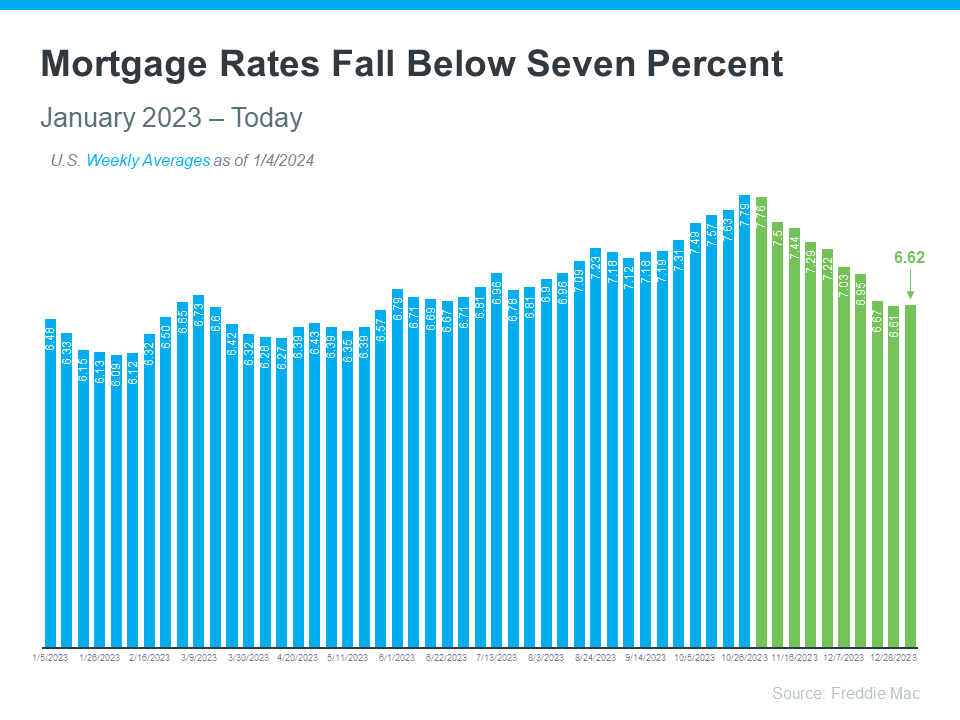
If you want to buy a home, it's important to know how mortgage rates impact what you can afford and how much you’ll pay each month. Fortunately, rates for 30-year fixed mortgages have come down significantly since the end of October and are currently under 7%, according to Freddie Mac (see graph below):

Mortgage Rates are Declining

This recent trend is great news for buyers. As a recent article from Bankrate says:

“The rate cool-off somewhat eases the housing affordability squeeze.”

And according to Edward Seiler, AVP of Housing Economics and Executive Director of the Research Institute for Housing America at the Mortgage Bankers Association (MBA):

“MBA expects that affordability conditions will continue to improve as mortgage rates decline . . .”

Here’s a bit more context on how this could help with your plans to buy a home.

How Mortgage Rates Affect Your Search for a Home

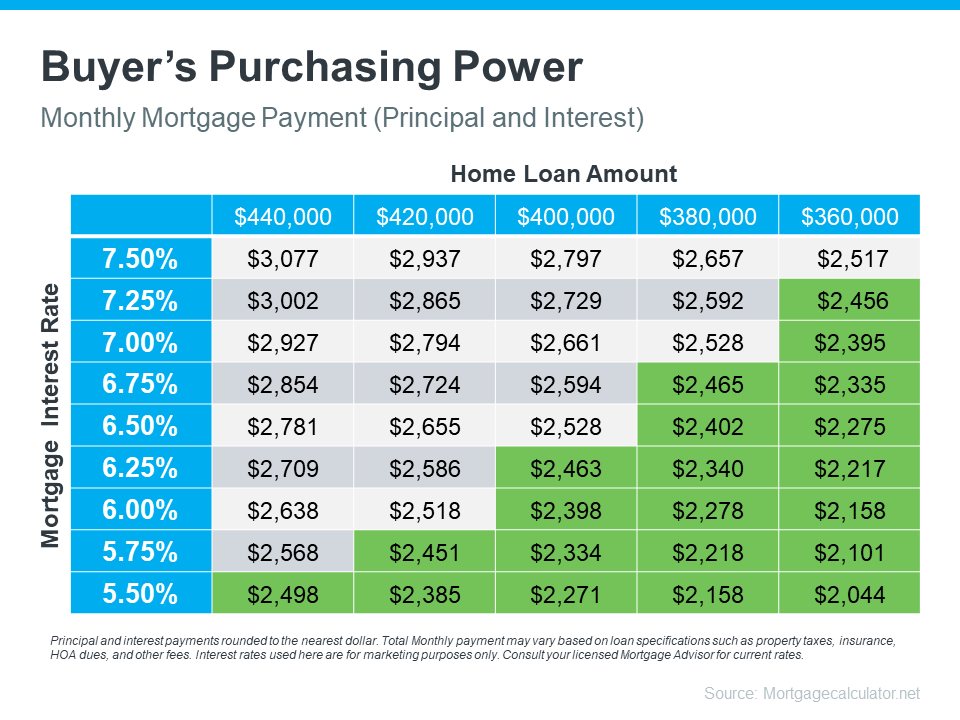
Understanding the connection between mortgage rates and your monthly home payment is crucial for your plans to become a homeowner. The chart below illustrates how your ability to afford a home changes when mortgage rates shift. Imagine your budget allows for a monthly payment between $2,400 and $2,500. The green part in the chart shows payments in that range or lower (see chart below):

Buyers Purchasing Power


Posted in Buyers, Market Updates
Jan. 17, 2024

How to use Home Equity

Ways Your Home Equity Can Help You Reach Your Goals

If you’ve owned your house for at least a couple of years, there’s something you’re going to want to know more about – and that’s home equity. If you’re not familiar with that term, Freddie Mac defines it like this:

“. . . your home’s equity is the difference between how much your home is worth and how much you owe on your mortgage.”

That means your equity grows as you pay down your home loan over time and as home values climb. While it’s true home prices dipped slightly last year, they rebounded and have been climbing in many areas since then. Here’s why that price growth is good news for you.

In the latest Equity Insights Report, Selma Hepp, Chief Economist at CoreLogic, explains:

With price gains continuing to help homeowners build wealth, equity has reached a new high and regained losses that resulted from declines last year. And while the average U.S. homeowner gained over $20,000 in additional equity compared with the third quarter of 2022, some markets are seeing larger increases as price growth catches up.”

And that figure is just for the last year. To help you really understand how that number can add up over time, the report also says the average homeowner with a mortgage has more than $300,000 in equity. That much equity can have a big impact.

Here are a few examples of how you can put your home equity to work for you.

1. Buy a Home That Fits Your Needs

If your current space no longer meets your needs, it might be time to think about moving to a bigger home. And if you’ve got too much space, downsizing to a smaller one could be just right. Either way, you can put your equity toward a down payment on something that fits your changing lifestyle.

2. Reinvest in Your Current Home

And, if you’re not ready to move just yet, you can use the equity you have to improve your current home. But it’s important to consider the long-term benefits certain upgrades can bring to your home’s value. A real estate agent is a great resource on which projects to prioritize to get the greatest return on your investment when you sell later on.

3. Pursue Personal Ambitions

Home equity can also serve as a catalyst for realizing your life-long dreams. That could mean investing in a new business venture, retirement, or funding an education. While you shouldn’t use your equity for unnecessary spending, using it responsibly for something meaningful and impactful can really make a difference in your life.

4. Understand Your Options to Avoid Foreclosure

While the number of foreclosure filings remains below the norm, there are still some homeowners who go into foreclosure each year. If you’re in a tough spot financially, having a clear understanding of your options can help. Equity can act as a cushion if you’re not able to make your mortgage payments on time.

Bottom Line

If you want to know how much equity you have in your home, let’s connect. That way you have someone who can do a professional equity assessment report on how much you’ve built up over time. Then let’s talk through how you can use it to help you reach your goals.

If you have any questions on this article or other real estate challenges, please contact me directly!

Until next time, stay real informed!


Richard Allen

REALTOR®, Media Realty Group, Inc.

Licensed in MA, CT, RI and NH

President, the realinsyghts group™ LLC

Zillow Premier Agent

508-686-0940

rich@realinsyghts.com


The information contained, and the opinions expressed in this article are not intended to be construed as investment advice. the realinsyghts group™ LLC and Media Realty Group, Inc. do not guarantee or warrant the accuracy or completeness of the information or opinions contained herein. Nothing herein should be construed as investment advice. You should always conduct your own research and due diligence and obtain professional advice before making any investment decision. the realinsyghts group™ LLC and Media Realty Group, Inc. will not be liable for any loss or damage caused by your reliance on the information or opinions contained herein.